
Central Africa does not suffer from a shortage of ideas.
Across the region, universities, research centers, think tanks, government institutions and development partners generate enough evidence to guide government’s actions on trade, infrastructure, agriculture, health, governance, industrialization and economic transformation. And yet, too often, the distance between policy recommendations and actual implementation remains wide.
This is the real policy challenge facing Central Africa: not how to produce more evidence, but how to make evidence matter when decisions are made, budgets are allocated and policies are implemented.
The distinction is important. Scientific and research capacity is often treated as a consequence of economic development (Alonso Rodríguez-Navarro & Ricardo Brito, 2022). But there is another way to look at the relationship: knowledge can itself be an engine of development when it is connected to institutions capable of acting on it (Fayyaz, A., Bartha, Z, 2025). This is the rationale behind the 2026 Central Africa Think Tank Forum organized under the theme, «From Evidence to Action: Strengthening Policy Uptake in Central Africa» by the Nkafu Policy Institute of the Denis Lenora Foretia Foundation, from September 10-11, 2026 at the Hilton Hotel in Yaounde-Cameroon.
The question for Central Africa is therefore not simply whether the region has enough scientific wealth to guide decision-making. It is whether it has built the systems that allow knowledge to travel – from think tanks, laboratories and universities to ministries, from ministries to budgets, from budgets to program, and from program to making transformative impact for the betterment of populations livelihood. This reflects what I am tempted to call the «development highway». It questions the efficiency of the entire policy-making process.
Why Good policies still fail at the point of delivery
Sometimes the institution responsible for delivering it does not have enough staff, money or the full authority required to enforce the strict observance of its prerogatives. Sometimes ministries work in silos, leaving no one clearly responsible for implementation. At another time, a strategy is approved without a realistic financing plan or measurable targets, while at other times, political priorities change before a policy has had time to be fully enforced or even produce results.
Implementation should not be an afterthought. Every serious policy recommendation should confront the practical questions from the beginning: Who will implement it? With what resources? Under which rules? What capacity exists? Who needs to cooperate? How will progress be measured? And who will be held responsible when implementation stalls? These questions provide the basis for mapping out realistic policies that relate with the implementation ecosystem.
In the same vein, these questions are particularly urgent as Central African countries pursue commitments that cross national borders.
AfCFTA, ECCAS integration, Economic Partnership Agreements (EPAs), regional infrastructure and efforts to expand infra-African trade will not succeed simply because agreements are signed at the regional level. These agreement must translate in effective policies governing customs systems, building transports, energy and telecommunications infrastructures. These agreements must further regulate national budgets, business practices a well as the daily experience of citizens and firms.
Institutions are where evidence meets reality
Research can identify what needs to change. It cannot, on its own, create the administrative machinery needed to deliver that change. A ministry may receive a strong recommendation on trade reform, for example, but implementation may depend on customs authorities, finance ministries, infrastructure agencies, local administrations and private-sector actors. If these institutions lack coordination or capacity, even the best analysis can remain on a shelf.
This puts an important responsibility on researchers and think tanks. Policy advice must be grounded in the institutional realities of the countries it seeks to influence. A recommendation should therefore come with an implementation framework – not simply a diagnosis. The central Africa Think Tank Forum ambitions to provide the platform where we can identify these institutional bottlenecks, estimate resource requirements, suggest monitoring indicators, support implementation teams and independently assess progress. As such, their contribution should not end when a report is launched. This does not mean becoming an extension of government. On the contrary, independent research remains essential. But independence and practical engagement are not opposites.
Politics cannot be removed from evidence-based policy-making
Evidence does not enter an empty room. It enters a political environment shaped by competing interests and undergoes the pressures inherent to political systems dynamics such as electoral pressures, fiscal constraints and powerful constituencies among others. A reform may make economic sense over ten years while imposing costs on influential groups today. Politicians, understandably, may respond to the incentives in front of them. This is why better evidence does not automatically produce better policy.
Researchers need to understand the political economy around a recommendation: Who benefits? Who loses? Who can block reform? Who controls resources? Who has an incentive to support implementation – and who has an incentive to delay it?
Understanding these dynamics is not an invitation for researchers to compromise their independence. It is a recognition that policy influence requires understanding how decisions are actually made.
For think tanks, this means developing the ability to communicate evidence in ways that are technically credible but also politically and institutionally relevant.
2026 Central Africa Think Tank Forum: Bridging Central Africa’s shared problems to enhance collective action
The implementation challenge is not confined to individual countries. Across Central Africa, governments and researchers confront many of the same obstacles: weak or fragmented data, limited research financing, uneven institutional capacity, poor coordination and insufficient links between evidence producers and decision-makers. These common challenges point towards a regional solution.
A useful lesson from one country should not have to remain there. If a trade reform works in one Central African economy, neighbouring countries should be able to study, adapt and improve it. If an agricultural intervention fails, others should be able to learn from that failure rather than repeat it. This is the principle of cross-country learning and policy diffusion.
It requires stronger regional research networks linking universities, think tanks, policymakers, statistical institutions and other knowledge producers. It also requires more systematic sharing of methods, datasets and policy experiences. The Central Africa Think Tank Forum provides a unique opportunity of connecting these stakeholders together, fostering regional cooperation to help address one of the region’s most persistent constraints: the absence of institutions, mechanisms and partnerships to generate comparable, timely and reliable data.
Without good data, governments struggle to see where problems are concentrated, researchers struggle to evaluate what works, and regional institutions struggle to measure progress across countries.
Regional integration needs a stronger knowledge infrastructure capable of telling policymakers what is working, where implementation is failing and why. This is so because policy questions do not stop at signing an agreement. What barriers continue to confront traders at borders? Which regulations discourage cross-border business? Where are transport bottlenecks? Are smaller firms benefiting? Are regional value chains emerging? Regional frameworks need evidence that reflects how Central African economies actually interact.
And the relationship should work in both directions: regional frameworks should draw on national evidence, while regional commitments should create incentives for countries to collect better evidence. That is how regional integration becomes more than a political project. It becomes a learning system.
Can civic and private organizations become part of the implementation infrastructure?
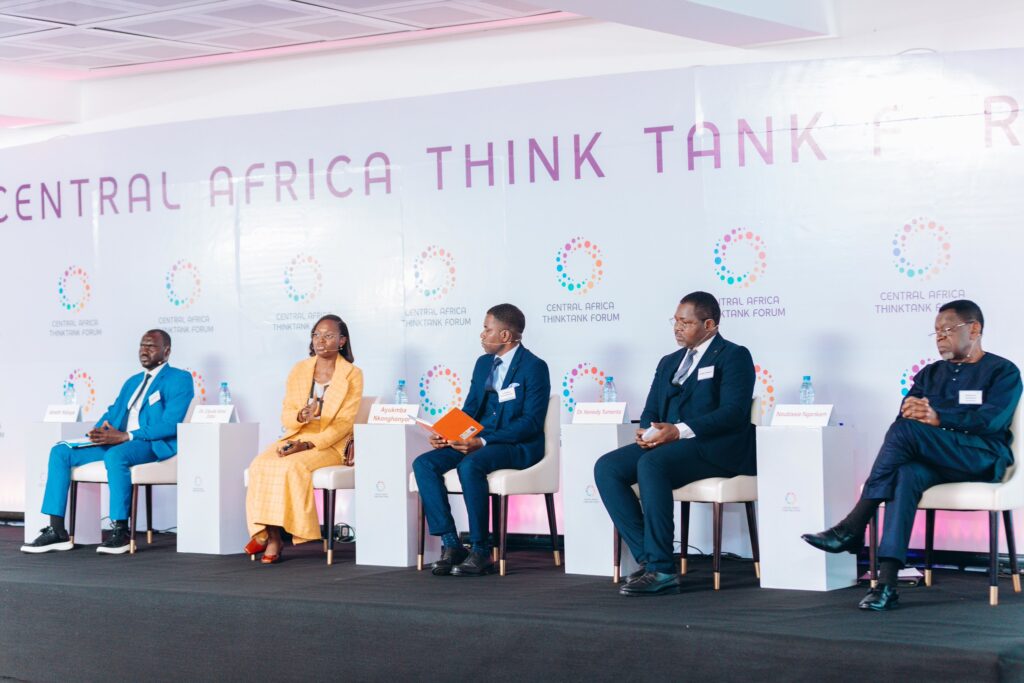
This is where the Central Africa Think Tank Forum can play a distinctive role. Think tanks and civic organizations have traditionally been judged by the quality and visibility of their research. But the region’s policy challenges demand something more. The question should increasingly be: what happens after the report? Who helps translate the recommendation into an implementation plan? Who identifies the institutional bottleneck? Who tracks the budget? Who checks progress six months later? Who documents what worked and what needs to change?
A collective think-tank platform could help answer these questions. Working together, institutions can pool expertise, compare country experiences, generate cross-border research and engage regional institutions with a stronger evidence base. They can also create a feedback loop in which implementation itself generates new research. The goal is not to produce more publications for their own sake. It is to produce knowledge that changes decisions, strengthens institutions and improves outcomes.
The private sector is not left aside. Businesses are often the first to feel the consequences of policy gaps – at borders, in markets, in access to finance, infrastructure and regulation. Their experience can therefore provide practical evidence on what works and where implementation breaks down. Stronger engagement with chambers of commerce, business associations and firms can help test policy recommendations against economic realities, identify barriers to regional trade and investment, and ensure that frameworks such as AfCFTA translate into opportunities that businesses can actually use.
The call to action: build the bridge, not another report
Central Africa does not need another diagnosis of its development challenges. It needs stronger bridges between the knowledge that already exists and the institutions responsible for acting on it.
Governments need to create greater demand for credible evidence and strengthen the institutions that can use it. Regional bodies need to make evidence a more systematic part of regional policy-making. Research institutions need to design implementation-sensitive recommendations. Think tanks need to work collectively across borders and track whether their ideas survive beyond publication. Civil society, journalists and citizens need better access to the information required to hold institutions accountable.
Donors and development partners also have a role to play: support should increasingly reward collaboration, long-term policy engagement, institutional strengthening and measurable implementation – not simply the production of another report.
The Central Africa Think Tank Forum can help provide the platform for this shift. Its opportunity is to connect institutions that too often work separately and build a regional ecosystem where evidence travels, policies are tested, experiences are shared, implementation is monitored and lessons return to the research community.
That is ultimately the missing link. Central Africa does not lack knowledge. It lacks enough mechanisms for turning knowledge into collective action. The measure of a successful evidence ecosystem should therefore be whether evidence helps governments make better choices, whether those choices receive the resources they require, whether institutions can deliver them, and whether citizens can see the difference.
The region’s next policy frontier is not producing more evidence. It is making the evidence it already has become impossible to ignore – and difficult to leave unimplemented.
By Ayukmba Nkonghonyor, Deputy Communications Director, Denis and Lenora Foretia Foundation
Email: [email protected]