
Cameroon: Think Tanks Fuel Independent Journalism in Central Africa
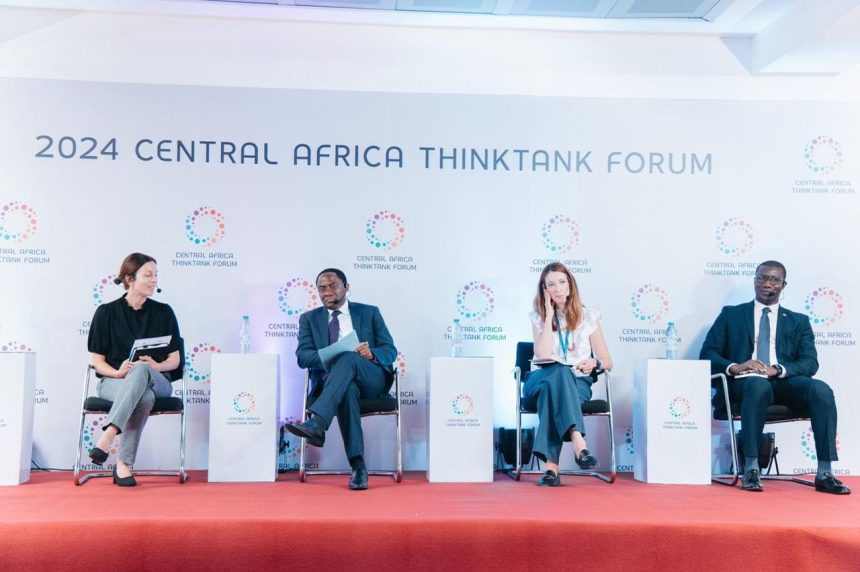
By Boris Esono Nwenfor YAOUNDE, Cameroon – In the heart of Central Africa, where press freedom often hangs in the balance, think tanks are emerging as a powerful allies in the fight for independent journalism. The region, with its complex political landscape and challenges to media freedom, is increasingly witnessing the intervention of think tanks which are shaping the region’s democratic process. Following the second edition of the Central Africa Think Tank Forum organized by the Nkafu Policy Institute, a think tank of the Denis and Lenora Foretia Foundation, think tanks across the Central Africa subregion were highlighted for the indelible role they play in the democratic process in the region. “Think tanks can help in the advocacy drive and lobbying for an enabling environment for the journalists to operate in both in Cameroon and across the central Africa sub-region. The journalism space is challenging and journalists need capacity building especially on the aspect of fact-checking,” said Baiye Frida Ebai, Chair (Cameroon)-ASIS International & Women in Security, Peacebuilding Coordinator for BAWAC Cameroon. “There is also a need for cross-cutting collaboration between the media and think tanks as media organizations help in the dissemination of materials and policy papers that are carried out by think tanks.” The 2nd edition of the Central Africa Think Tank Forum which ran from August 21 – 22, 2024 was under the theme: “Empowering independent voices in the Central African Region.” The Central Africa Think Tank forum provided a platform to harness and amplify independent voices for policy change, actionable reforms and positive development of the Central African Region. Think tanks across Central Africa subregion offer training, and a platform for dialogue that empowers journalists to tackle complex issues, such as corruption, human rights and governance. By providing access to credible data and expert analysis, think tanks can help journalists produce well-researched, impactful stories that hold power to account and also inform the public. In a region where press freedom is often curtailed by the government in place, think tanks play a vital role in advocating for the rights of journalists. They engage in policy advocacy, pushing for reforms that protect media practitioners from harassment, censorship, and legal challenges. These efforts are pertinent, especially in countries like Cameroon, where the media is frequently targeted by both state and non-state actors. “Journalists need to empower themselves because the government will not do that. The ball is in the court of journalists across the subregion,” Professor Kingsley Ngange, Deputy Vice-Chancellor in charge of Research and Cooperation with the Business World, at the University of Buea said. “Journalists are also their problem. They have the power to change the media 1990 media law but are not doing enough in that regard. Journalists are regarded as the fourth estate because they hold the other powers accountable but this power is not always a given.” Despite their significant contributions, think tanks across the Central African subregion face numerous challenges. Limited funding and political interference hinder their impact. With the growing recognition, however, the role of supporting independent journalism is a positive sign. As Cameroon and its Central African neighbours continue to navigate the complexities of democracy, the partnership between think tanks and independent journalism will be crucial. In a region where the free flow of information is often stifled, think tanks stand as champions of the cause of independent journalism. Their role as a catalyst for democratic change in Central Africa becomes even more important.
Cameroon:Ambassador Lamora Highlights Vital Role of Think Tanks in Shaping Inclusive Public Policy
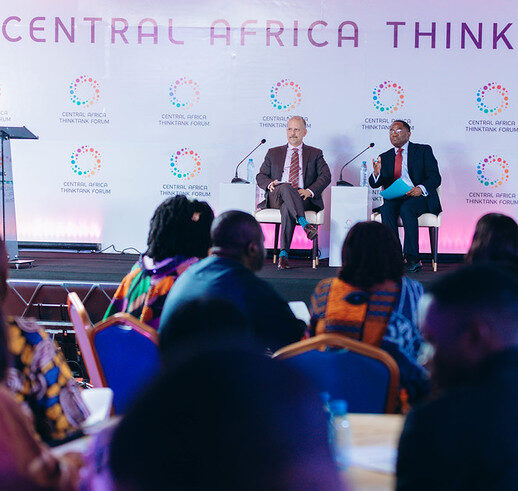
By Boris Esono Nwenfor YAOUNDE, Cameroon – The U.S. Ambassador to Cameroon, H.E. Christopher J. Lamora, has highlighted the crucial role think tanks play in building better policy during the 2025 Central Africa Think Tank Forum in Yaoundé, organised by the Nkafu Policy Institute, a think tank of the Denis and Lenora Foretia Foundation. Drawing on decades of diplomatic experience and knowledge from renowned U.S. institutions, Ambassador Lamora urged Central African nations to harness the power of research, dialogue, and collaboration to shape inclusive and effective policy responses to regional challenges. In his keynote titled “Building Better Policy: Lessons from Think Tanks in the U.S. and Beyond”, Ambassador Lamora described forums like the Central Africa Think Tank Forum as essential platforms for meaningful engagement. “It’s this kind of forum and the skills and the knowledge that you will all develop and that you’re sharing that is going to help you and help all of us address the most important policy issues of our time. And it’s exactly the sort of inclusive dialogue that mature and maturing democracies need,” Ambassador Lamora said. Lessons from U.S. Think Tanks Ambassador Lamora spotlighted several influential American think tanks, including the Heritage Foundation, Brookings Institution, and Atlantic Council, each of which plays a vital role in shaping U.S. policy through research and debate. He explained that while these institutions differ in ideology and focus, ranging from conservative economic policy to libertarian ideals and non-partisan global governance, they share a common commitment: rigorous analysis, open dialogue, and public engagement.In his keynote, Ambassador Lamora described forums like the Central Africa Think Tank Forum as essential platforms for meaningful engagement “The Heritage Foundation, for example, is known for its deep work in promoting conservative economic policy, national security, and governance reforms. It translates this research into concise and actionable recommendations, often in very plain language, making it accessible to both policymakers and the general public,” Ambassador Lamora added. “The Brookings Institution is widely recognised for its non-partisan and more academic approach. Its scholars conduct long-term research that informs debates on everything from macroeconomic policy to urban planning, with an emphasis on global development and governance. While officially non-partisan, Brookings is viewed as being more to the left or liberal side of the American political spectrum.” These organisations, according to Ambassador Lamora, do more than produce papers; they influence lawmaking. From congressional hearings to treaty negotiations, their work often directly informs public policy. “A successful think tank,” he noted, “can translate ideas into action.” The Ambassador emphasised the importance of neutrality and trust. “Think tanks offer a unique space where policymakers, academics, and citizens can engage in respectful, constructive discussions, even when opinions differ sharply. In today’s fast-moving information environment, such trusted, evidence-based platforms are invaluable.” Africa’s Think Tank Potential Turning his focus to Central Africa, Ambassador Lamora affirmed the region’s growing potential and existing capacity. He praised institutions like the Nkafu Policy Institute and the Denis and Lenora Feretia Foundation for their leadership in conducting research on economic governance, empowering youth, and driving civic engagement. “In Cameroon, institutions like the Feretia Foundation and the Nkafu Policy Institute are already playing this vital role, conducting research on economic governance, hosting policy dialogues, and nurturing the next generation of policy leaders,” Ambassador Lamora noted. “Strengthening partnerships with international peers, including U.S. think tanks such as those that I mentioned earlier, can further amplify the positive impact of Cameroonian and African think tanks more broadly.” To strengthen this ecosystem, he proposed several practical collaborations between U.S. and Central African think tanks: Joint research and policy papers; Fellowships and exchange programs; Public policy dialogues and Youth-focused mentorship and training initiatives. “This forum, in which you will participate this week, is an important step in the process of building a political ecosystem that is innovative and resilient,” Ambassador Lamora said. Ambassador Lamora concluded with a rallying call for continued dialogue and partnership. “I am looking forward to future discussions and future partnerships. Together, we can ensure that good ideas, based on research and proven data, allow us to develop policies that define our common future.” About the Denis & Lenora Foretia Foundation The Denis & Lenora Foretia Foundation was established to catalyse Africa’s economic transformation by focusing on social entrepreneurship, science and technology innovation, public health, and progressive policies that create economic opportunities for all. The Foundation partners with local governments, policymakers, private enterprises, civil society organisations, and development partners to expand resources available to entrepreneurs, farmers, and small business owners, thereby improving individual livelihoods. About the Nkafu Policy Institute The Nkafu Policy Institute is an African think tank with a mission to provide independent, in-depth, and insightful policy recommendations that enable all Africans to prosper in free, fair, democratic, and sustainable economies. The Institute’s team of analysts, experts, and researchers works on governance and democracy, health and education, peace and security, science and technology, and economic policy.
Cameroon: Central African Think Tanks Push for Inclusive Policy Governance

By Ayukmba Nkonghonyor* Civic organisations across the Central Africa region and beyond gathered to echo the fundamental role of think tanks in policy-making processes. Convening over 250 participants from 10 countries, including the United States of America, Canada, Germany, and Peru, this landmark Think Tank Week, organised by the Nkafu Policy Institute of the Denis and Lenora Foretia Foundation, triggered conversations around a key concern: “Shaping the Future: Role of Think Tanks and Civil Society in Central Africa Policy Processes”. This timely topic crystallises the state of Central Africa’s policy governance infrastructure, aimed at addressing challenges facing the capacity of think tanks to effectively shape policies in a shrinking space, where their development initiatives within the sub-region are seriously hampered. Beginning with the 2025 Emerging Leaders Program, which is ushering twenty young Cameroonians from all regions aged 35 and below, the week-long event set the pace by empowering community–based social entrepreneurs with leadership skills, through inspirational practical thematic discourses and enriching encounters to further mature and prepare them to step in and take advantage of available leadership opportunities with the leitmotiv of driving change.Participants at the end of the third Central Africa Think Tank Forum, convened by the Nkafu Policy Institute, a think tank of the Denis and Lenora Foretia Foundation To heighten the momentum, twenty-five high-profile leaders of civil society organisations amplified their voices, brainstorming on solutions to tackle common challenges impeding the growth of their respective organisations, especially as they navigate the current state of volatility. The share of best practices and experience stood out as an added value that made engagements even more practical and enriching. Culminating in the Central Africa Think Tank Forum, this third edition of the Think Tank Week hosted some of the finest minds within the think tanks space in Central Africa and globally, with over thirty speakers, cutting across representatives of diplomatic missions, government officials, international organizations senior staff, scholars and academia, researchers, civic organizations, as well as local and international media. Speaking during his opening remarks, Dr. Denis Foretia, Executive Chairman of the Nkafu Policy Institute, described this gathering as an initiative to “address practical questions on how think tanks’ engagement with government can ensure tangible uptakes and create sustainable funding models that support long-term institutional development”. An opportunity for the United States Ambassador to Yaoundé, H.E. Christopher John Lamora, to emphasise that “many of the region’s most complex challenges—economic diversification, governance reform, and digital transformation—cannot be addressed by government action alone. They demand sustained collaboration among public institutions, civil society, academia, and the private sector.” To further expand visibility and amplify the voice of think tanks in the region, the Nkafu studio provided high-quality professional interviews with key speakers on critical thematic issues. Closing the series of plenaries, panel discussions, breakout sessions, alongside engaging one-on-one conversations, networking breakfasts, and dinners, all captured by over a dozen media organs, think tanks formulated the following recommendations to individual stakeholders of the policy governance infrastructure, appealing to: Increase policy collaboration at national level and within sub-regional international organizations; Increase financial and technical support to think tanks to strengthen the overall policy governance infrastructure of individual States; Create conditions and policy incentives to enhance transnational partnerships on collaborative projects and Improve political will for the creation of a more conducive environment that fosters think tanks development initiatives, by enacting incentivizing laws as well as by the strict application of the rule of law. The curtain of the 2025 Central Africa Think Tank Forum closed down on August 8, 2025, with a promise to reconvene from September 10-11, 2026, during the 4th edition of what has now emerged to be one of the biggest policy rendezvous on the African continent. *Ayukmba Nkonghonyor, Senior Communications Manager, Denis and Lenora Foretia Foundation.